I’ve been using Google Photos since the Picasa Web days. From storing photos and albums it’s today turned into a smart photo library.
If you use Google Photos, you would’ve noticed the ‘Assistant’ automatically creating new variations of your images, animated versions and even making a movie out of your photos.
Cheetah GIF created from a burst of photos
I recently decided to experiment with my photography workflow by uploading images directly from my Fuji X100s to Google Photos. I expected to see a movie and some gif images show up.
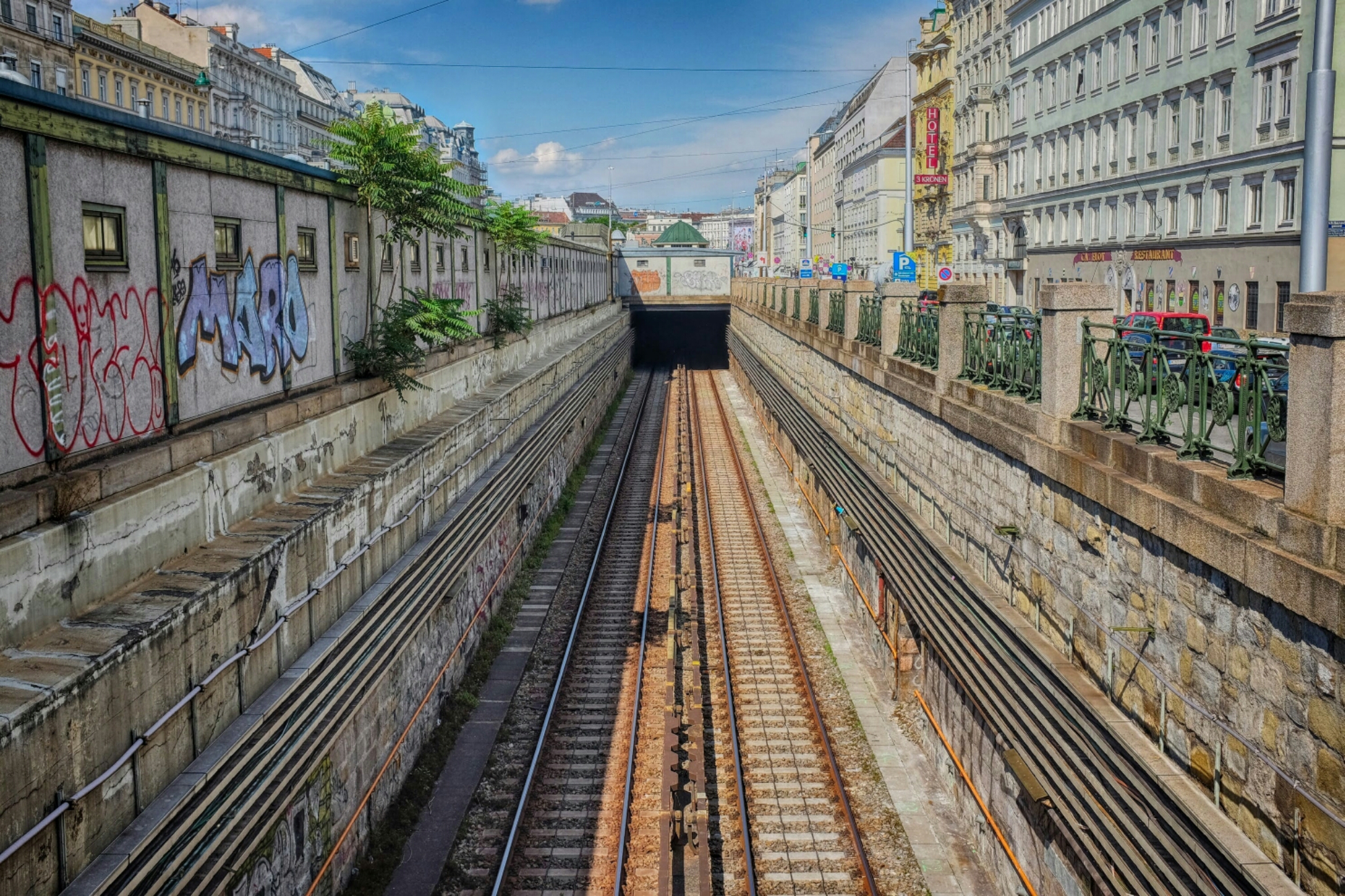
But to my surprise I noticed HDR images it had created by merging 3 different exposures of the same scene I had shot. While the result was not perfect, I was amazed to the extent to which Google had invested in this product.
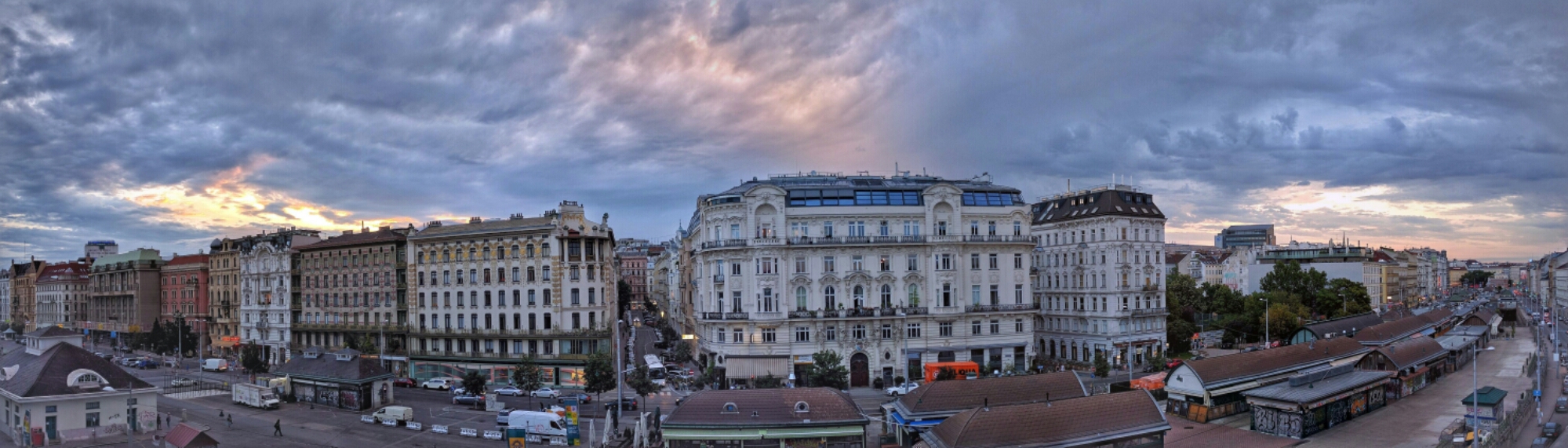
HDR image of the underground train tunnel in ViennaPano image stitched from multiples images by Google Photos
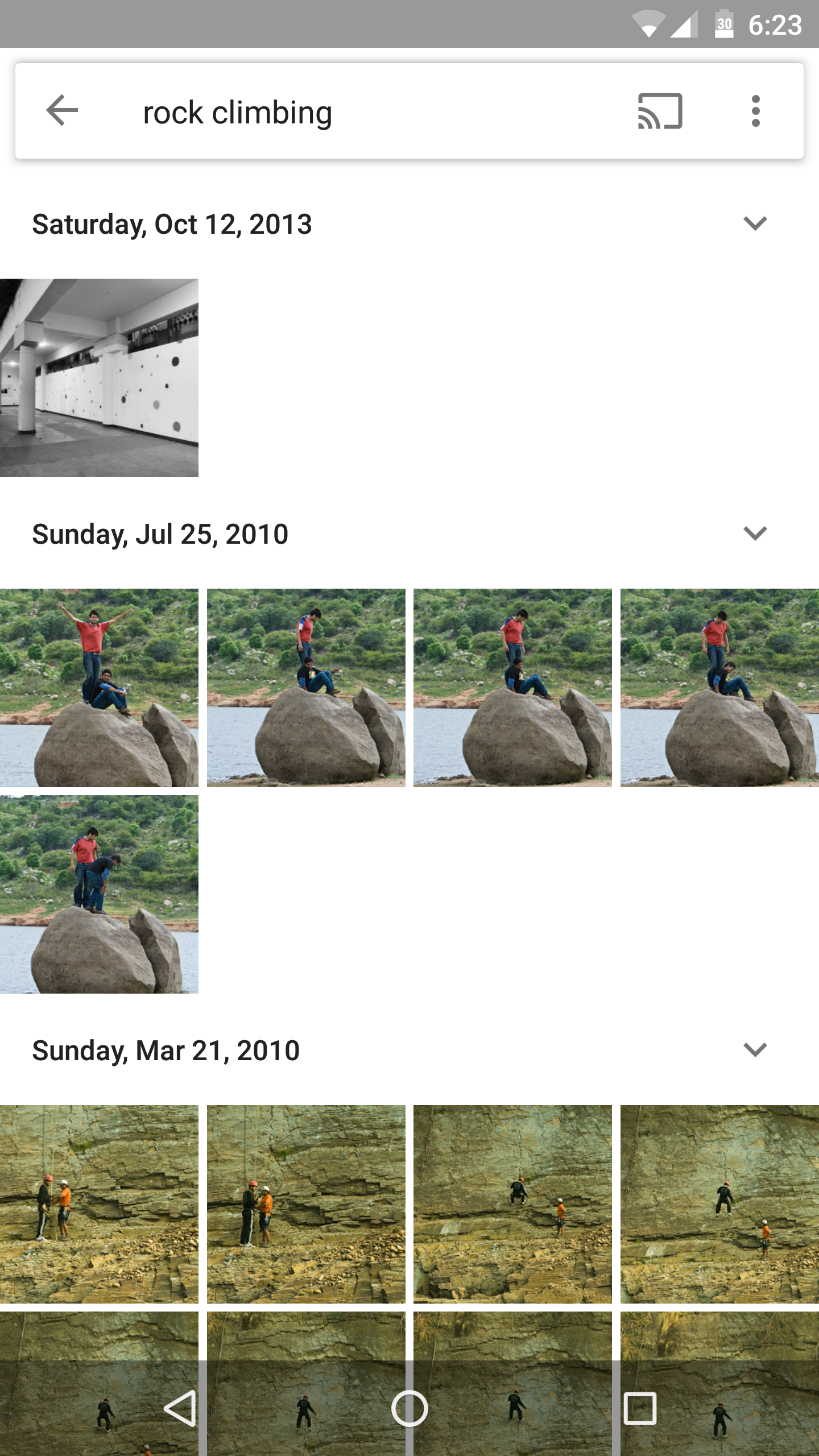
If you haven’t tried the search feature, give it a shot and you will be surprised at the results. It searches using AI and will pick landscapes, snow, trees or whatever else you search for and can be found in your images. This is not simple file name or meta information search, but looking for those artifacts in the image itself.
None of these images have any description in the file name or album name that indicates rock climbing
After seeing these rather good HDR images created automatically, it got me thinking if in the future a product like this with AI, can replace Lightroom?
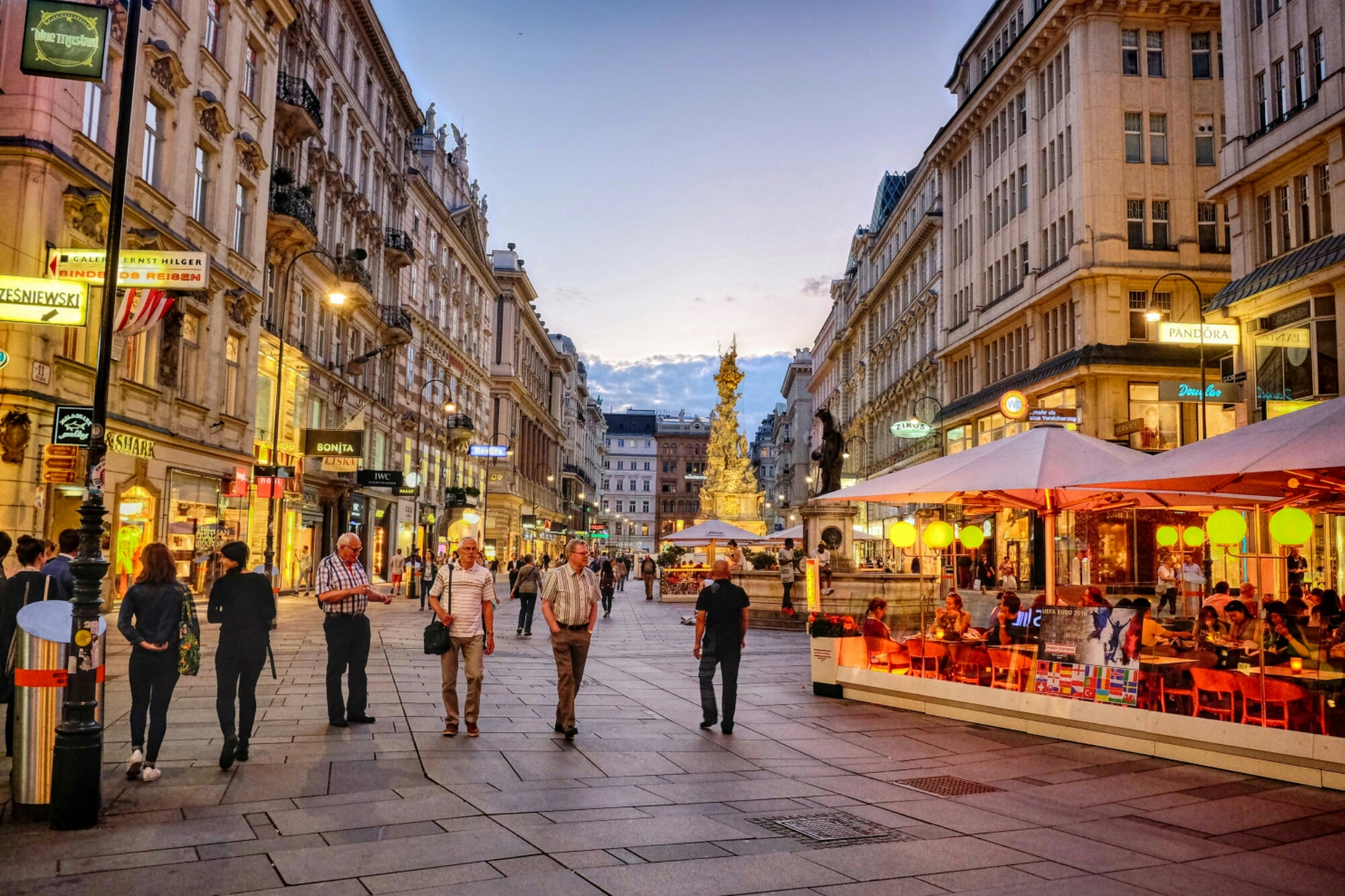
Old Town area of Vienna
What if it learned your photography and post processing style over time and applied that automatically to images? I would take that 9 out of 10 times, while still retaining the option of manually correcting images if required.
That kind of AI in photography and post processing specially, is not too far away. The Snapseed app and the Google Photos web app auto correct for horizontal alignment. Think of more such basic corrections that can be done without human intervention.
I’ve been using Lightroom for the longest time as it fits my post processing workflow perfectly. It’s a huge time saver, but if you’re a photographer, it can still suck a lot of your time. Heck, I have images waiting to be processed from as far back as two years.
For folks like me who don’t need Photoshop or too much of post processing, this automated processing of images could be great. We still have a long way to go of course before it can completely replace Lightroom, but would’ve thought all of this was possible a few years ago.
If you’ve been in the client servicing business for any length of time, you would have seen the two-line requirements for projects from potential clients. And then followed by a request for a quote by the end of the day.
To respond the right way, we need to first understand the reason behind such client requests.
Here’s why I think most clients don’t give you a detailed requirement:
Once a client has identified the vendor, they believe their job is done. They do not understand the importance of their involvement. Clients need to set the vision that will drive the project.
Requirements for projects are ultimately driven by business goals. Without articulated business goals, there is no guiding principle for a website or any outsourced project. These business goals are then to be translated into corresponding website KPIs and CTA.
Most people don’t factor the planning time into the equation. A lot of projects don’t start on time as a result of this. At Pixelmattic, we insist on getting clarity in requirements and planning for the project before jumping in.
With no clear roles or stakeholders defined within the organization to handle the project, you either end up with too many decision makers or none. Web development is a collaborative process that requires client inputs at regular intervals. This is a major reason projects miss their deadlines.
It’s a big misconception that requirements for projects have to be technical in nature. They can be, but they don’t need to start out being technical. The job of a good consultant or business analyst is to convert business needs into technical requirements that a designer or developer can use.
There is so much emphasis, even if it’s for negotiation purposes, on adhering to tight timelines. This sometimes results in clients trying to micromanage or wanting status updates on an hourly or daily basis. Focus on execution and not enough on planning or requirements is an investment with diminishing returns.
I’ve seen many companies, eager to close the opportunity and jump right into project implementation, only to end up fire-fighting issues mid-way through the project. That’s doing a disservice to the client and your own business.
Requirements elicitation is an art that requires patience and the ability to ask the right questions. The onus is on the vendor to probe and get all the details necessary for a successful execution of the project.
If you’re in a similar business, how do you tackle it?
I attended a session on Growth Hacking at Social Media Week Bangalore. Deepan Siddhu shared a bunch of tools for growth hacking that I think can be very useful.
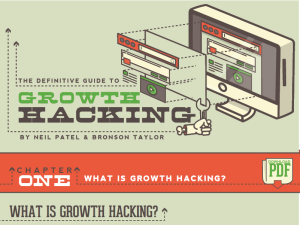
What is Growth Hacking?
Growth Hacking is a combination of methods, tools and best practices to achieve a singular goal – Growth! This is particularly useful for startups. Companies like Dropbox, AirBnB, and Quora have used these tactics to achieve spectacular growth.
Sometime last year, I came up with an idea of starting a company blog. I set up a folder on Google Drive, asked the team members to contribute ideas and assigned topics based on the person’s interest or line of work.
We managed to write a few blog posts over 2 months and then completely forgot about it. There were a number of faults with the way it was planned and executed.
More recently, I’ve been researching and learning about Content Marketing from a more strategic perspective. I’ve realized from my own previous experiences with the company blog and this personal blog, that a few things seem obvious on hindsight.
So, here are the 5 mistakes in content marketing from my previous experiences:
1. Create content. Web traffic will follow.
When you set out to create content, in most cases a blog, you tend to think that visitors will flock to your site or blog, engage with it and it will go viral. The reality is far from it. It is hard work not only creating content, but attracting the attention of the visitors and retaining their interest while they’re on your site.
It helps to think of ways to market your content and not focus just on creating it.
2. Execute without a strategic plan
A recent study indicated that most people write blogs and create content without a plan in place (Only 44% of marketers have a documented strategy).Without a documented plan or strategy, the chances of failure are that much higher.
When you take the time to put a schedule and an action plan in place, the chances of you or your team following it are higher.
If you use WordPress as a blogging platform, you can use this plugin to help you plan.
3. Expect immediate results
Similar to #1, a lot of people will expect to see an immediate impact on their bottom lines. This could be attributed to outbound marketing influences and thinking, where you push out messages and expect instant results.
I suppose one of the reasons we gave up was not seeing a spike in graphs. People are generally used to seeing those after running expensive ad campaigns. Our failure contributes to this statistic – 95% of blogs are abandoned.
Another reason is not taking into consideration the effort each blog post takes and/or creating time in your schedule to do this consistently. 54% of the bloggers spends less than two hours on average per blog post. On the other hand, pro bloggers at Copyblogger spend 5-7 hours researching, writing and editing for every blog post.
4. Talk about yourself and what you do.
Such an easy trap to fall into. When you launch a product/service, all you want to do is talk about how great it is and all the endless features it offers.
But all that people want to know is if your product/service is solving any of their problems.
Utility X Inspiration X Empathy = Quality Content
Content has no utility to the reader if you are not trying to address her interests or problems.
5. Not measure or track data systematically.
If you can’t measure the value of what you are creating, there is no feedback to change or improve. It is vital to have some sort of system in place to track your metrics. Google Analytics is only the first step.
If you’re using blogging as a strategy in a B2B context, then you probably have to look at mapping customer’s buying process to your content strategy. Joe Puliizi calls it the Content Segmentation Grid.
Content Segmentation Grid with Buying Cycle
If you want avoid these 5 mistakes in content marketing, have a plan!
Trying to cultivate a blogging culture within a company can be a difficult task. Sumeet, who is a great storyteller and blogger, recently wrote about his learnings from running a blogging competition at ThoughtWorks and gamifying that experience. You should definitely give it a read.
What has been your experience with blogging for your company or personally? How do you maintain that consistency?
It was December 2008. Lehman’s Brothers had shut, the markets had turned upside down, and I had just graduated with my Masters degree. And I needed a vacation.
A few friends from school decided to go on a week long trip to the sunshine state of Florida. When we landed there, I was reminded of the Bangalore weather; it was sunny, yet pleasant. NY, on the other hand, was freezing.
Our first stop was Weston, Florida, a posh neighbourhood with million dollar mansions overlooking a golf course and a lake.
The next day we drove to Tampa. The drive was fabulous with lush grasslands (Everglades) on either side and a bolt straight road cutting through them. I wish I had good pictures to share from that drive. The grasslands are a sight of beauty.
We spent the whole of the next day at the Busch Gardens Theme Park. The highlight of the day was going on a crazy rollercoaster called the Sheikra. The ride starts like any other roller coaster, but then you are taken vertically up, inch-by-inch, to a height of 200 feet, stopped right at the top and turned looking straight down a 90 foot drop. Before you know it, you are hurtling down at 110 km/h. You experience forces of up to 3.5G on some turns. It finally ends in a flourish with a splash of water. You walk out feeling buzzed. Some experience!! If only I had a Go Pro. 🙂
The scariest part of the rollercoaster was this… (watch the entire sequence here)
The theme was Africa, so they had some animals too.
You can see more pictures from Busch Gardens here. I must warn you, these were early days in my photography obsession.
The next couple of days were spent in Orlando at the Universal Studios, Islands Of Adventure and Seaworld. This trip was the first time I experienced rollercoasters, the real ones, not the Funworld type. By the end of the trip, I was addicted to the adrenalin rush. We ran from ride to ride to cover as many as we could in a day. On all days we were literally the last people to leave the theme park. In fact, on one particular day, we had the security escort us out. 🙂
You can see a few more pictures from these theme parks here – Seaworld, IOA, Universal
Before we flew back to NJ out of Miami, we spent the last day and a half there. The best memory I have of that is sitting on South Beach Miami watchtowers at night and sipping beer.
I’ll force you to see a few more pictures before you go. 🙂
Hampi was on my list of places to visit for a long time. I never found the time or the company to go with. And then out of the blue, I managed to find both. The latter turned out to be quite a find 🙂 (for those who know the story).
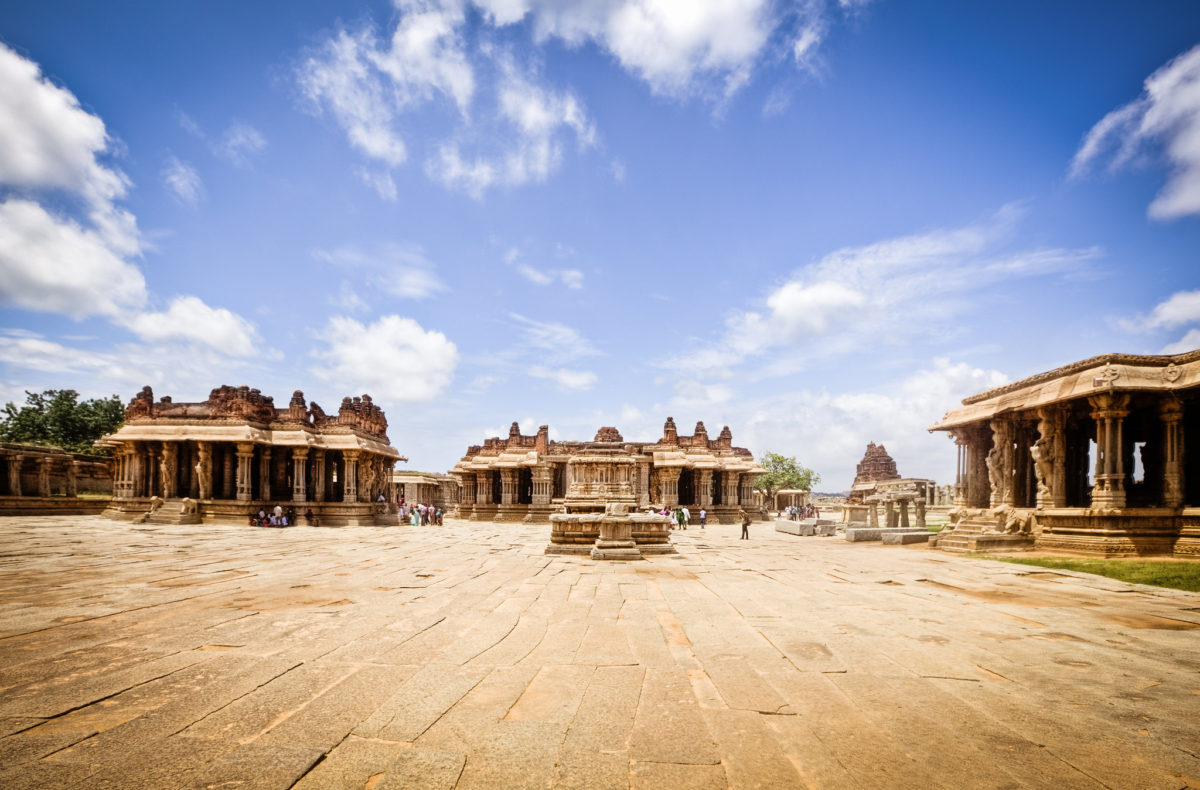
Hampi is a mesmerising place if you’re a lover of history and culture. Now, a small village, but a thriving metropolis during the rule of the Vijayanagara Empire in the 15th century, it is one of the few relatively well-preserved historical sites in India. Like most thriving cities, it finds itself on the banks of the Tungabhadra river.
While most of the remaining structures can be traced back to the Vijayanagara Empire, some predate to as far back as 1CE. Jain temples found in this region are also traced back to a pre-Vijayanagara period.
Hampi can be reached by road via three major routes from Bangalore – Chitradurga/Hospet, Hiriyur/Bellary and Anantpur/Bellary. The Hiriyur-Bellary Road is probably the most scenic, and with hardly any traffic, it’s a pleasure to drive on this stretch. As you near Hospet, be prepared for crater-sized potholes and heavy truck traffic.
A city of this size with seven layers of fortifications (of which only the innermost is well preserved), seems to have been a well-planned and constructed settlement. An ancient gateway that served as a toll gate in those days still stands strong. Talarighatta Gate, meaning toll gate, was one of the primary entrance points to the urban centre of this sprawling 15th-century metropolis. The road from here also leads to what is probably the most famous site in Hampi, the Vijaya Vittala Temple Complex.
The image below if of one of the three massive gateways to the Vijaya Vittala Temple. Archaeological Survey Of India has banned the movement of private vehicles around this area. They have shuttles (electric vehicles) driven by women (+1 for women’s empowerment) that will get you to the main site and back to the parking lot.
Once you’re in, you will notice many temples and courtyards around you. The one structure, that grabs everyone’s attention is the famous Stone Chariot.
Temple with the musical pillars
Stone Chariot
It might look like a monolithic structure, but it isn’t. Since the chariot couldn’t be moved, it’s wheels were spun and you can notice the wear and tear. [Some interesting facts about this iconic structure in Hampi http://hampi.in/stone-chariot]
You will find intricate carvings on stones everywhere you look. Stories from the Ramayana and depictions of Chinese travelers who visited Hampi during its heydays can be seen in many places.
As you walk around and absorb the beauty of this place, you will also notice the artistic talent, architectural vision and clever use of the structures. The first picture in the collage below is a blueprint/miniature model of the temple behind it. The bottom right picture is an example of rainwater harvesting. The fine holes drilled into the stone is for water to drip and collect below.
Another example is how they provided slits in the roof for the light to come through and reflect off the water below to light up the interiors. All we can come up with these days, are energy inefficient glass-fronted buildings.
Away from this temple complex is another area of well-preserved structures where you’ll find bathhouses, last remains of the fortification, a destroyed Queen’s palace and much more.
On the second and last day of our trip, we visited the most religious and famous temple in Hampi. Virupaksha temple located in the old town of Hampi is considered the most sacred of temples there. The large gateway (Gopura), a nine-storeyed structure, is the main entrance that leads into the courtyard and the temple.
The area facing the temple is the bazaar which until recently was still being used by squatters. Thankfully they’ve been evicted and hopefully it will be restored soon from whatever damage it might have suffered.
If you’re looking for other activities besides visiting places mentioned above, Hampi also offers lots of trekking and rock climbing opportunities. A short trek from this place (http://goo.gl/yG9ulX) took us to the view below. The stones arranged like little pyramids can be seen all over this place. A local we spoke to at the temple below, who came with us on the trek, told us these were created by folks who come up here to make a wish.
If you live in Bangalore and looking for a quick weekend trip, Hampi is one of the best places you can go to. The trip turned out to be a memorable one for many reasons.
Have you been to Hampi? I’d love to know what your experience of the place was like.
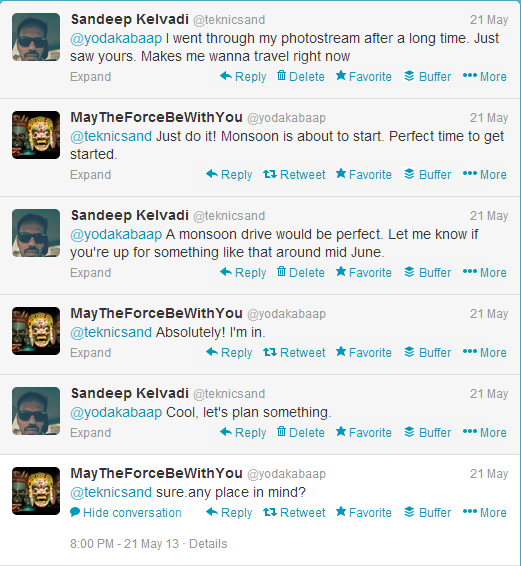
What started off on a whim on Twitter after seeing Abhinav’s blog post turned into a conversation and eventually a plan was made over a beer at Toit. I’d always dreamed of driving along the Indian coast, specially after my experience of driving from SF to LA along US 1. The monsoon was just the perfect time for such a drive.
Day 1 – Nagarhole, Kalpetta
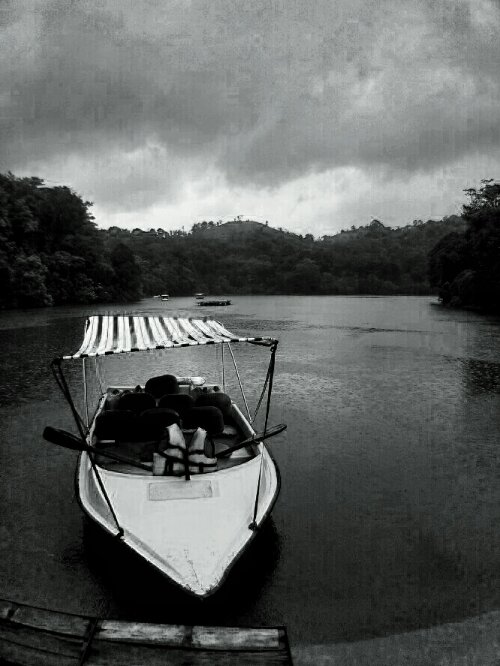
I picked up Abhinav from his place and we left Bangalore by 7am. We drove through the lush green Nagarhole forest and stopped every time we spotted any wildlife. The moment we crossed into Kerala, the roads got even better. As we approached Kalpetta, the winding roads, perfectly laid and painted, were an absolute pleasure to drive on. We stayed at a homestay called Four Seasons run by a lovely lady and explored a few places around Kalpetta that day like the Pookode lake.
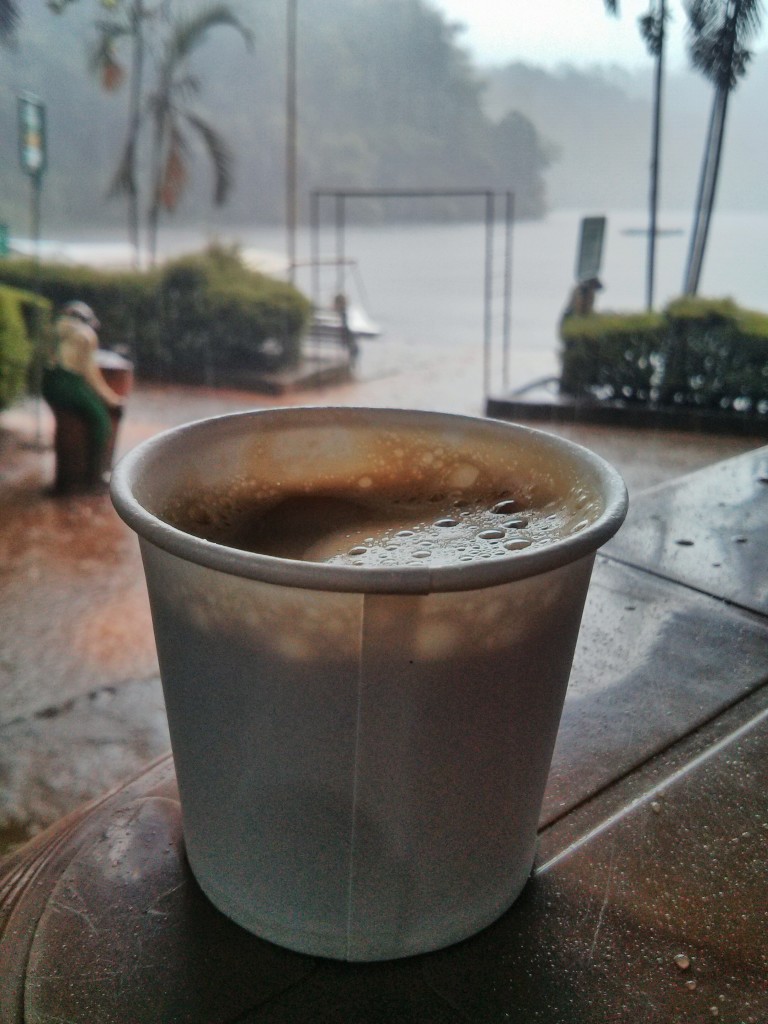
Shot on Nexus 4 – Sipping on hot coffee while it pours in the background. Pookode lake
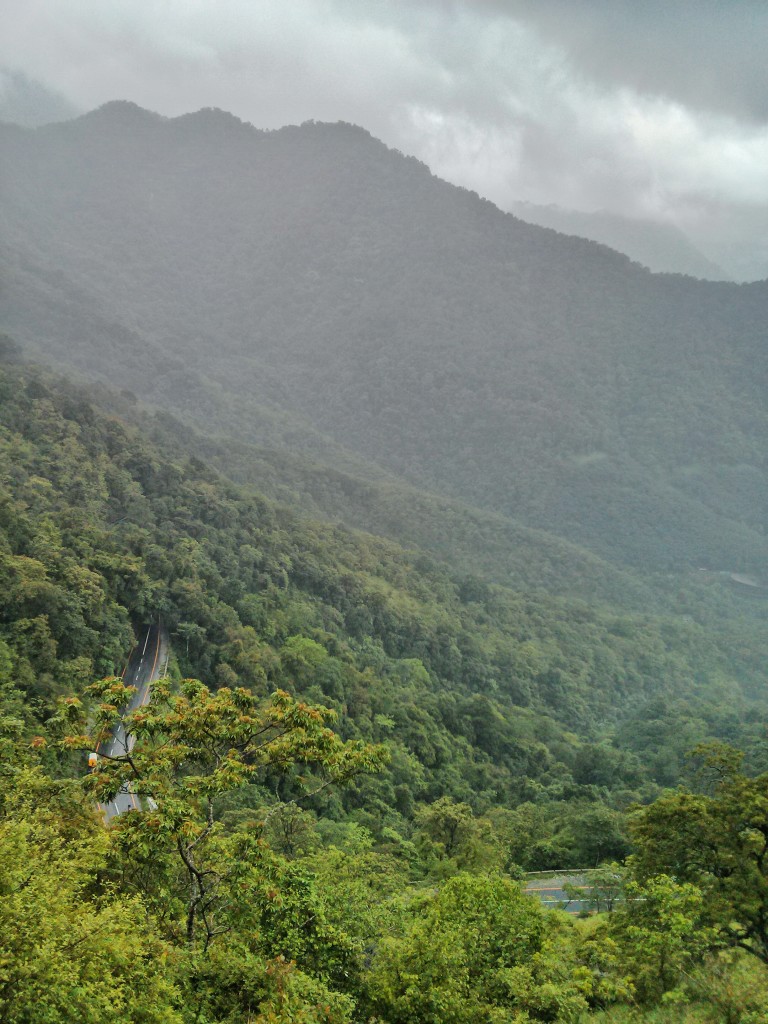
Shot on Nexus 4 – Winding roads in Wayanad
Day 2 – Kalpetta, Kannur
The day began with some lovely Appam and bird watching. Sat in the balcony watching the 15 minute cycle of rain and birds flitting from one tree to another. After checking out from our homestay, we drove to Chembra peak. It was a long drive up to the top, or rather the base. Winding roads, incessant rains and lush green tea estates presented us with numerous photo ops. We stopped at a couple of places on our way up. The walk from the parking to the watchtower was incredible. The panoramic view of the valleys and hills around was breathtaking. We decided to spend some time and shoot a few time-lapse sequences of the clouds drifting over the hills.
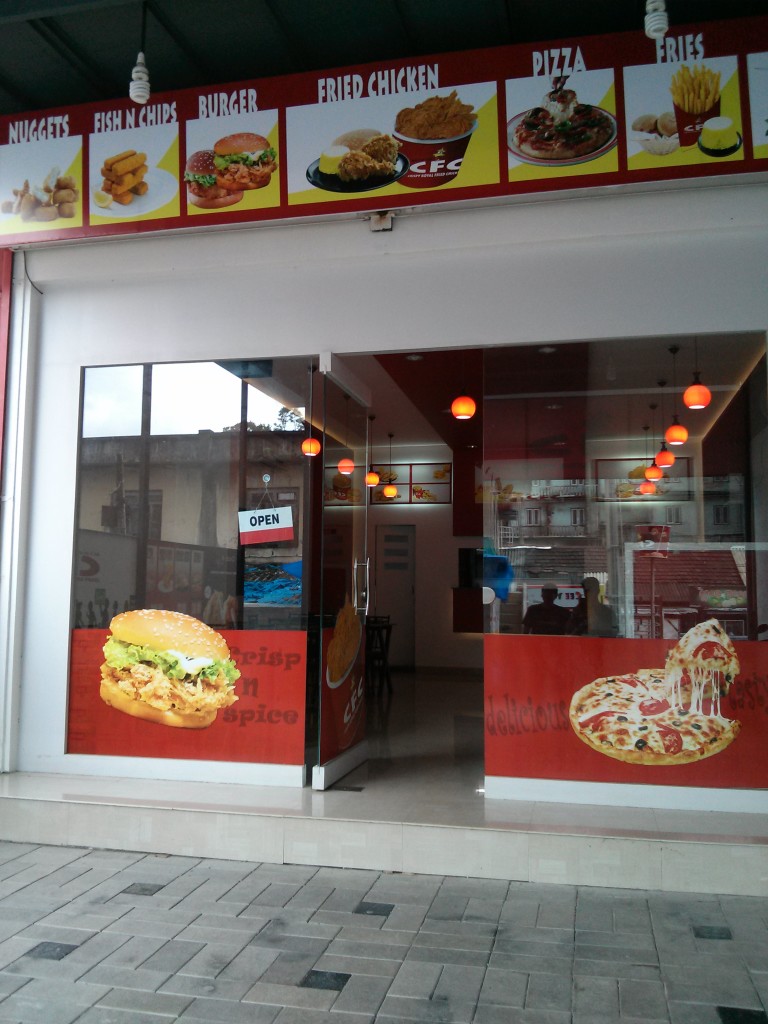
We then went to Banasurasagar Dam after lunch at CFC – Crispy Fried Chicken. A km of walk in the rain from the parking area to the dam, just like the previous place, was fun. It is the 2nd largest earth dam in Asia. Didn’t get too much of an opportunity to do time lapses as it poured every few minutes and by the time we left, it was around 5pm.
Our next destination was Kannur. The roads again were brilliant for the most part, while some parts were waterlogged. Every small town seemed to have a mandatory mosque and/or church. Drive in the ghats was brilliant as the roads were superb. Once it got dark, and we moved away from the Ghats, the roads got patchy in some places, the traffic slowed us down and night driving tired me out. After having reached Kannur, I was hoping to get to our place, recommended by our previous host, and crash immediately. But it took us an eternity to find the place. We finally managed to reach by 10, had dinner and watched torrential downpour and heavy winds blowing in from the sea, until midnight.
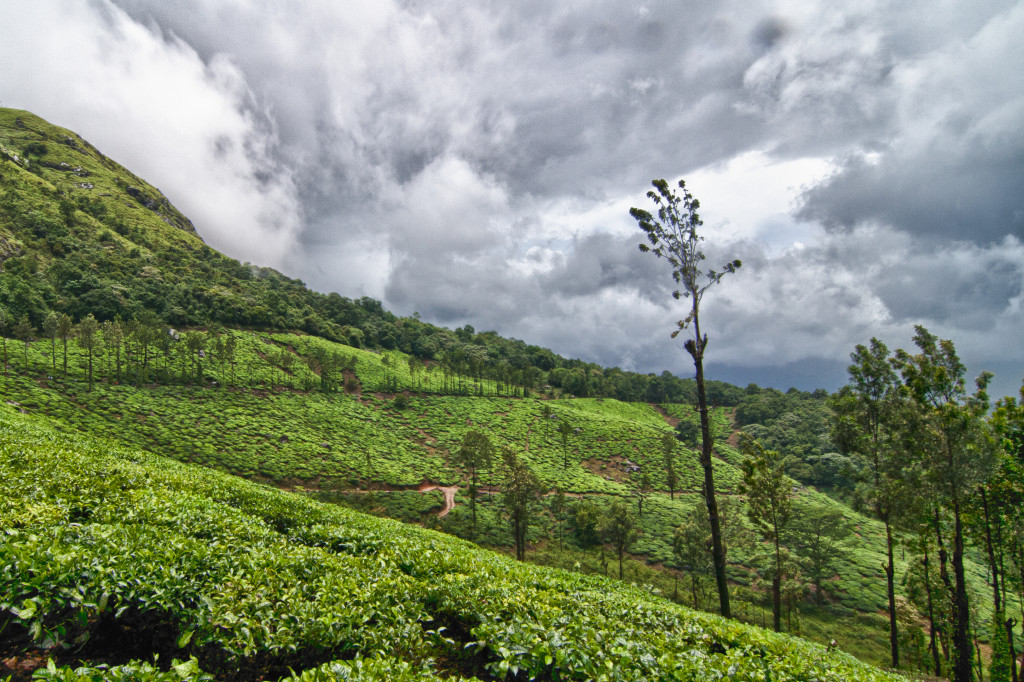
Tea estates around the Chembra peak area
Crispy Fried Chicken. They have branches!
Shot on Nexus 4 – Vertical panorama of the Banasura Sagar Dam.
Day 3 – Kannur, Muzhapilangad beach, Bekal fort
After breakfast, a cold water shower, and a passing storm captured on time lapse, we headed up towards Marvanthe in Karnataka. Our first stop was Muzhapilangad, Asia’s 2nd largest drive beach, a good 5kms stretch on which you can drive. I’d never done anything like this before, and it was quite an experience. As we were driving up and down the beach we could see a massive storm approaching the land and the waves got closer and closer and at one point going under the car. I managed to tear my flip flops from one of the receding waves while we were on the beach and I’d managed to soak my shoes on the first day, not a smart thing to do by not carrying weather proof shoes. I was now without any footwear and had to drive barefoot for a little while. Our next stop wasn’t a planned one but turned out to be fun.
We decided to stop at Bekal fort (you might recognize this place from Mani Ratnam’s Bombay). We walked up a watchtower hoping to get a good view of the coastline and the fort. Looking at the clouds we estimated it would take another 15 minutes for the rain clouds to pass over us, enough time to go check out the next couple of viewing spots. The next thing we know we’re stuck on this tower with blistering winds and heavy downpour for 10 minutes. I had to hurriedly put everything underneath the rain jacket and take shelter behind the wall from those winds. We were crouched behind the wall into a ball waiting for the rains to stop. When the rain gods were done I was soaked. Thankfully the camera and other things remained dry. When it subsided, we walked through the rest of the fort. Even if we had time we couldn’t have gone down to the beach below the fort because of the high tide.
It was 6pm by the time we left Bekal, and we reached Mangalore in 2 hours. Refueled the car and our stomachs and decided to push on through to reach Marvanthe. Driving on a single lane highway with buses using 6 headlights, all on high beam, can make it very difficult to drive. We finally got to our destination by 11pm with Abhinav taking over the wheel after dinner. Thankfully it wasn’t too hard to find unlike the last place. The roads weren’t as good as they were on day 1, but Kerala still had better roads overall. Almost every town/village we passed through in Kerala had to have a mandatory mosque and church. Also, kids on the street play football! Didn’t see a single cricket game that you generally see when you drive through the other parts of the country.
Waking up to this view in KannurOur resort/homestay was right on the beach in Kannur
Muzhapilangad beachShot on Nexus 4 – Kerala countryside
Looking through fort wall into the sea at Bekal Fort
Day 4 – Marvanthe, Karwar
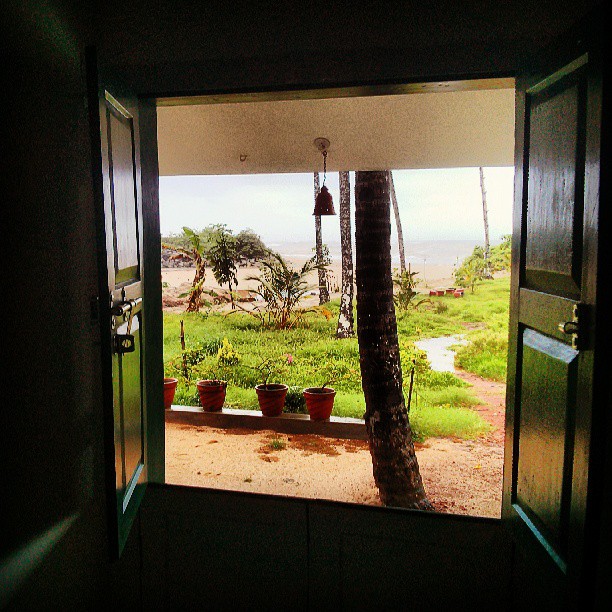
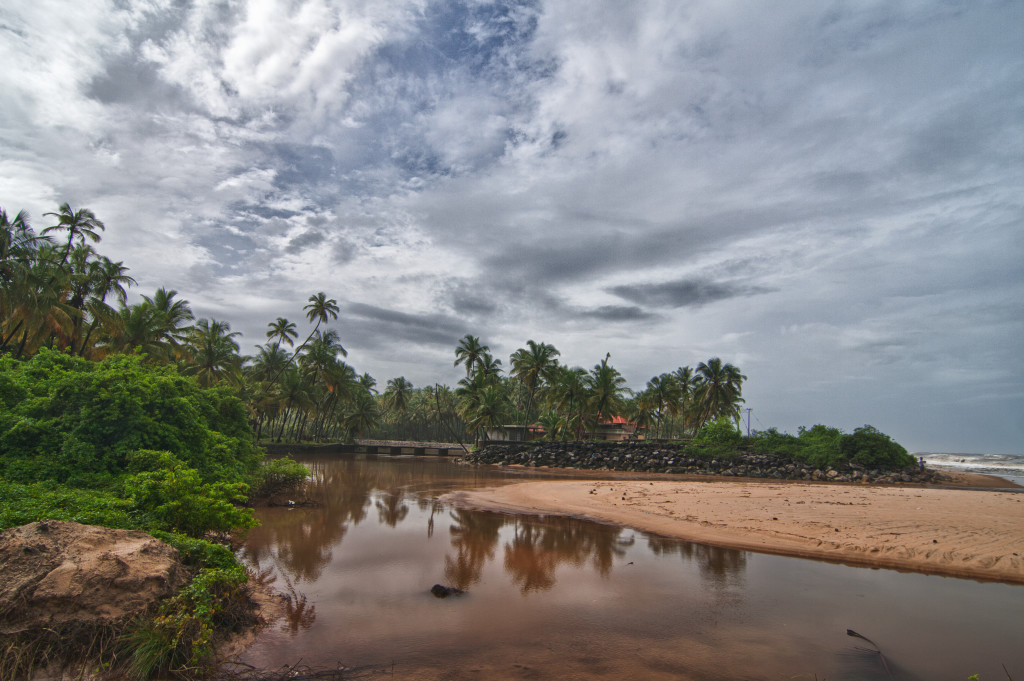
Spent the first half of the day lazying and walking around on the beach & the resort. The sea was rough to get in, but we kept ourselves busy with our cameras. The rain storms kept coming every hour. By the time we left the waves had reached the gate of the resort. The drive started after lunch. A stretch of about a km of the national highway runs right next to the sea, with fresh water running on the right, possibly the only such sight on a national highway in India. The roads were again surprisingly very good, except for about 10 km of bad stretch. It poured nonstop all the way upto karwar incredibly. The roads leading into Karwar are beautiful. Hills in the backdrop, tributaries running into the ocean on your left and lush green paddy fields at the foothills. The place we found while doing a quick search on our way turned out to be quite nice. It was located on a hill overlooking the Kali river bridge and the estuary.
Shot on Nexus 4 – Turtle Bay Beach Resort, Marvanthe
Shot on Nexus 4- Marvanthe Beach
Shot on Nexus 4 – Marvanthe again!
Shot on Nexus 4- Packed up for the monsoon. Marvanthe, Karnataka
Day 5 – Karwar, Hubli, Bangalore
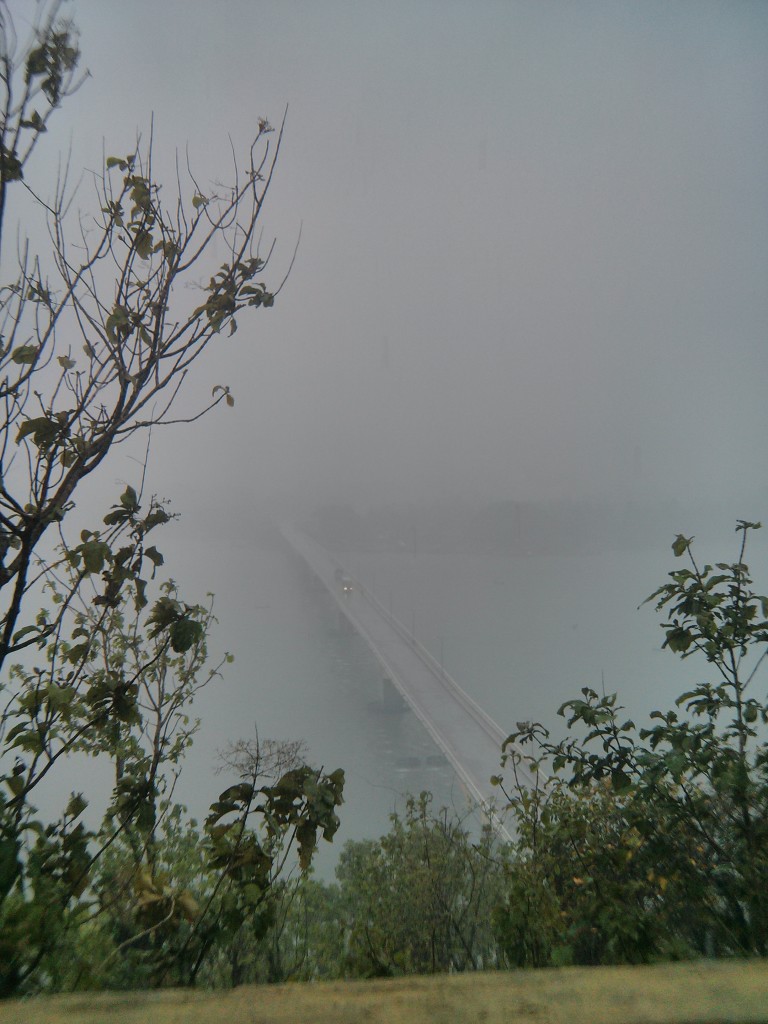
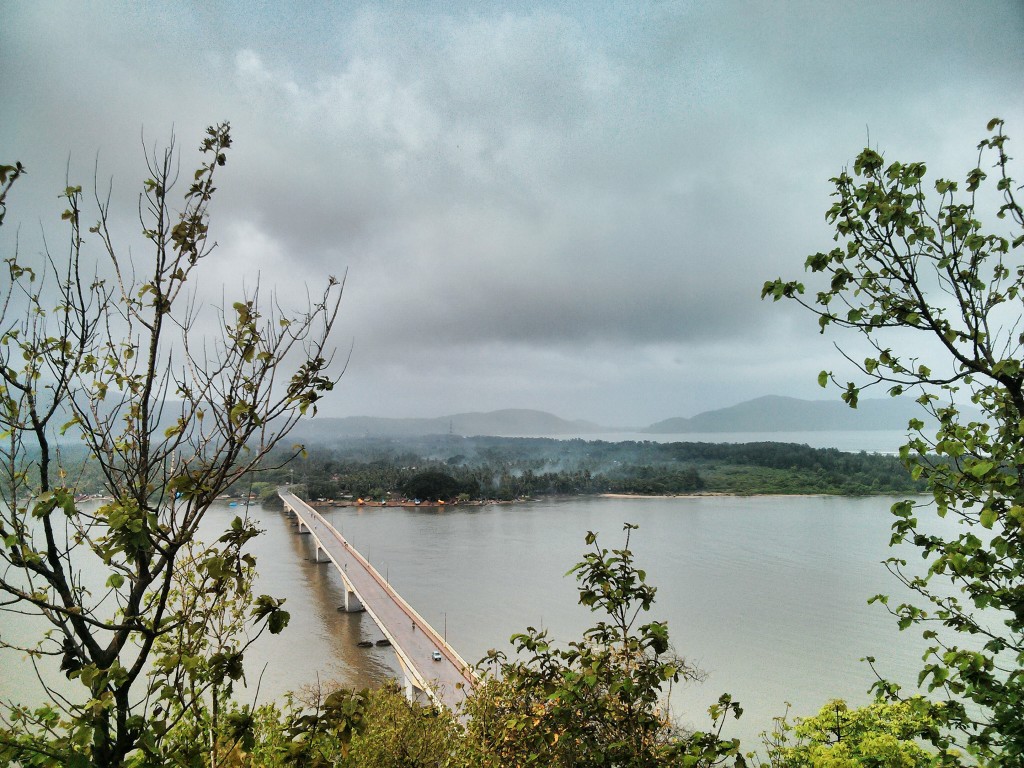
I woke up very early to see if I could get some good shots of the bridge from our balcony. It was amazing to watch the rain clouds drift in from the sea and the bridge disappear almost completely in that heavy downpour. Since the place we were staying at was an old fort located on a hill, it had a good view of the surrounding areas. We went to one such viewpoint and managed a few shots before it started to pour again.
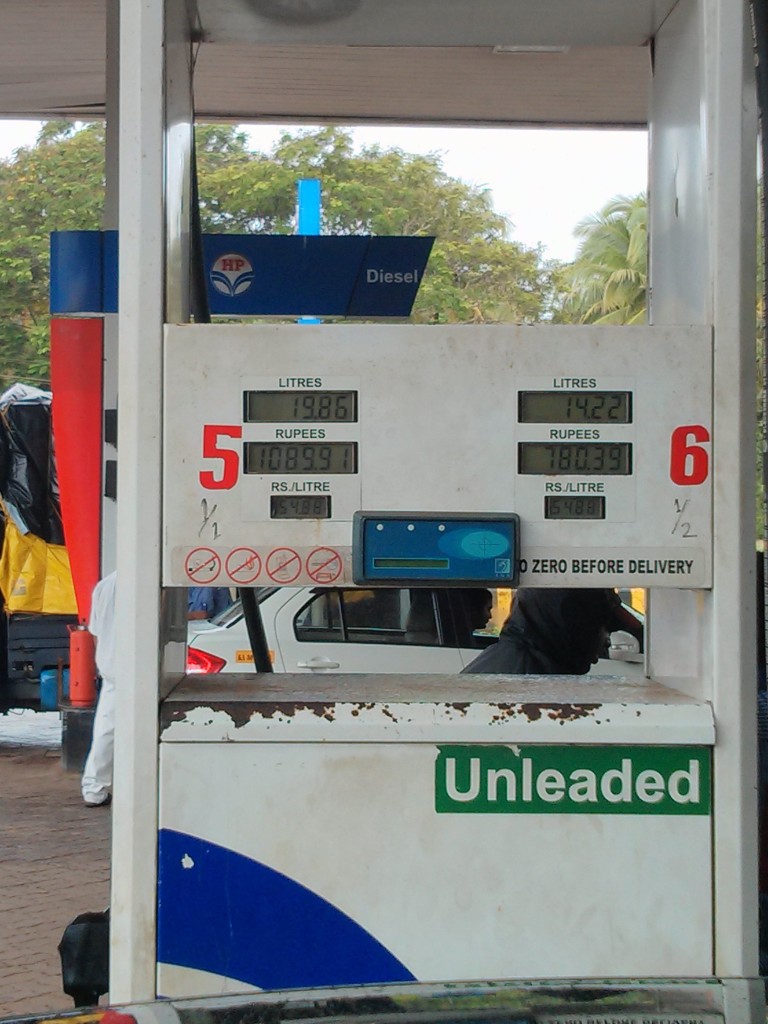
By now it was time to get ready and leave. We had our breakfast and decided to drive 10 kms further north and cross into Goa, for two reasons: We could tick off Goa on the list and most importantly to refuel at a whopping Rs.54.83 per litre. On our way back passing through Karwar we stopped for a quick walk through a warship memorial. The road to Hubli where we planned to have lunch, was again to my surprise, fantastic. After lunch, it was the straight line stretches of NH4 and we began to see some blue sky for the first time in 5 days.
Shot on Nexus 4- Kali River Bridge, Karwar. That’s not mist! It’s the rain storm moving inland from the sea.
Shot on Nexus 4 – View of the bridge after the storm passed. Karwar
Navy Warship Museum, Karwar
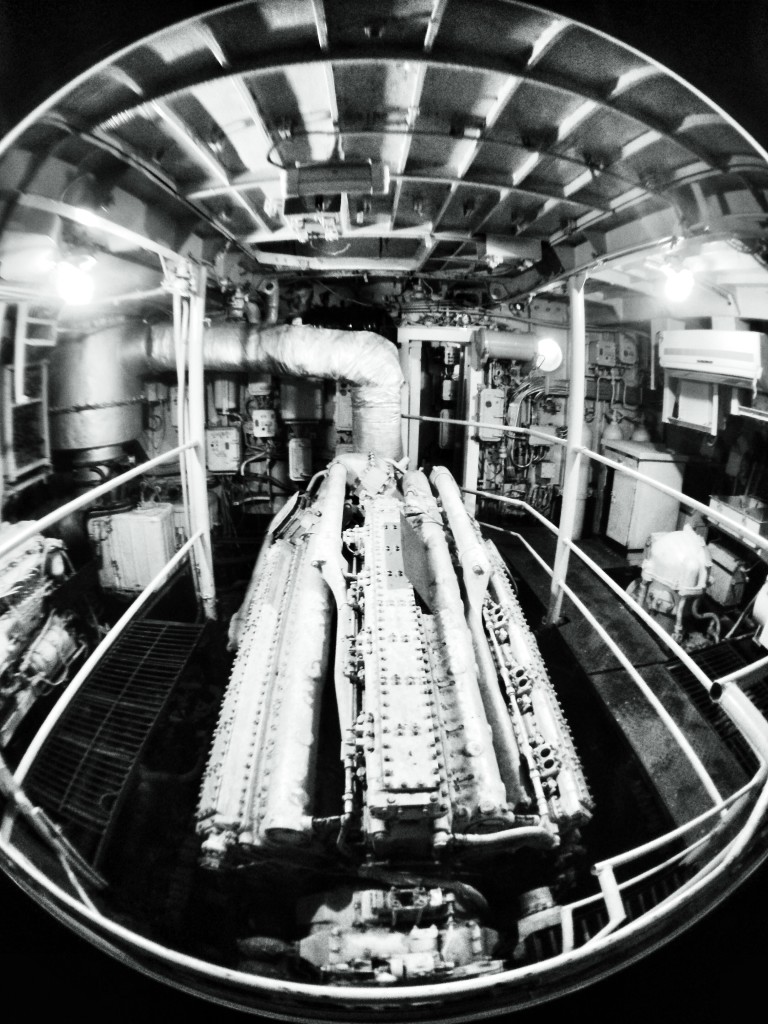
Shot on Nexus 4- Inside the warship engine room. KarwarNext time I go to Goa, I’m going to bring back fuel in Fenny bottles.
As you would’ve noticed by now, a lot of images on this trip were taken on my phone (Google Nexus 4, with the help of gorillapod and some photojojo lenses). It acted as my secondary camera during the trip and I was quite amazed at how well it could capture images. Chase Jarvis is right when he says “The Best Camera Is The One That’s With You.” Abhinav and me also took quite a few timelapse sequences during the trip. I stiched some of it together and made a video out of it. Take a look!
Build a product and the users will come they say. Sadly, that statement is deceiving. The users might come as a result of a marketing blitz, but for them to stay on and use the product and recommend it to others, they need to enjoy using the product.
Gamification beyond points, badges & awards
When designing a system, consider the social engagement verbs that you want to use to describe desired user behaviors. It is known that male users prefer competition, while female users like to collaborate. So identify your target audience, list the actions you want them to perform and then design features or flows around it.
Do you want the user to ‘Express’, ‘Compete’, ‘Explore’ or ‘Collaborate’?
Product Usage Lifecycle
Product Usage Lifecycle is another important aspect to consider while designing the system. What actions do you want the users to perform at the onboarding stage will be different from ongoing use and the passionate use phase. Needs of the users at each stage are different and therefore your goal must accordingly change as well.
Our approach when building products and adding features is to first look at Benefits, Ease of Use and then maybe the Positive Emotion it evokes. What if we turned that around? How about building virality into the product by delighting customers when they use your product? You’d save a few marketing dollars for sure. Intuit uses this approach to build their products. (Design for Delight)
Coming back to gamification, progress mechanics that involve points, badges, & leaderboards is the last step in game design. Having built a gamified product, I can tell you this is the easiest step, and therefore very tempting to do it first. Even here, one can dig deeper behind what I call the 1st layer of gamification, to identify patterns for reward schedules that tap into intrinsic motivation.
Another game design concept is the use of the MDA Framework – Mechanics, Dynamics and Aesthetics. Keep an eye on how much importance you pay to each and in what order.
Gamification, unfortunately is a much-abused word that has to come to signify trivial use of points, awards & badges. Gamification done right will provide better user engagement at every phase of product use. But it is also tougher and intellectually more challenging.
Amy Jo Kim and Jane McGonigal are two game designers you must follow if you’re interested in applications of game design.
Attended a TiE Bangalore event recently where the panel discussed the business of sports in India currently and where it is headed. Here are some highlights from the evening:
No avenues for sports management training or courses.
Education & research in the sports industry lacking
Global practices for sports management need to be adopted
If you fail at sports it does not mean you need to look for a career outside of sports. There are many careers around sports.
Success of the sports business depends on the ability to get at least 10-15% of the population to play sports.
Is there a business in sports beyond cricket?
Technology can play a role in overcoming the many obstacles in sports business and enable better efficiency in its operations.
Sports can’t sustain only on consumerism. It needs quality sportsmen and heroes.
India is now in a position to create sports properties for not only India but for other countries as well.
There’s not enough marketing talent working in the sports industry. Even the IPL, for all its glitz, fails to fill up every stadium for every match. And it only takes 3 million people to fill up every cricket stadium in India.
“If you are an entrepreneur, read this book. If you are thinking about becoming an entrepreneur, read this book. If you are just curious about entrepreneurship, read this book” – Randy Komisar, founding director of TiVo
1. Leap-Of-Faith Hypothesis
Every entrepreneur starts with an idea. That idea is usually based on assumptions. One assumption is about the value that one hopes to provide to the customer (value hypothesis), and the other is how to grow that value will grow into a sustainable business (growth hypothesis). The hypothesis is an ‘leap of faith‘ because there is no empirical evidence to suggest it will benefit the customers yet. It maybe based on intuition and market research reports. But it is important to identify and articulate the value and growth hypothesis as it forms the foundation on which the rest of the business is built. Lean Startup talks of a fundamentally different approach to testing whether the hypothesis was correct or not.
2. Validated Learning
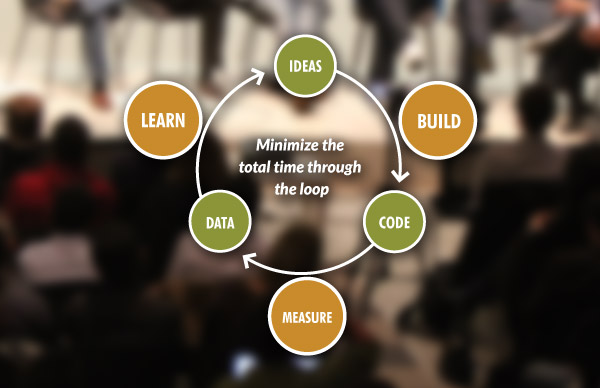
Learning from failures is meaningless if it can’t be measured. So the question is then, how do you measure what you have learned from your failures, while executing your startup idea? Lean Startup advocates the use of a feedback loop called Build-Measure-Learn. The idea is to create a MVP (Minimum Viable Product) with just enough features to test your hypothesis by interacting with your early adopters of the product. And to run through this loop as quickly as possible. Validated Learning is the process of using good metrics to measure the progress made with respect to the hypotheses identified earlier. By building rapidly, and testing it quickly with a small section of customers we are able to measure using a rigorous method, the progress made towards achieving our goals
Learning is the essential unit of progress for startups. The effort that is not absolutely necessary for learning what customers want can be eliminated. – Eric Ries
3. Innovation Accounting
Tradtional methods of measuring progress use vanity metrics, which is generally based on cumulative growth (Eg: total number of hits, the total number of customers etc). These type of metrics hide the real progress and therefore give you a false sense that everything is going well. The idea behind innovation accounting is to use metrics that help startups make decision quickly on which direction they need to spend their energies on. That is were actionable metrics come into the picture. Using tools like the cohort analysis, A/B split test and customer interviews one can measure the real progress of the startup.
4. Pivots
When you start to measure using metrics identified under the innovation accounting process and comparing the numbers against the baseline established by your value and growth hypothesis, you might realize that either you’re not moving towards that goal, or have been stagnant. This requires a course correction and restating of your hypothesis taking into account the lessons learned through validated learning. This, in essence, is a “Pivot”. Pivots can be of many types – Zoom-in Pivot, Zoom-out Pivot, Customer Segment Pivot, Customer Need Pivot, Platform Pivot, Business Architecture Pivot, Value Capture Pivot, Engine of Growth Pivot, Channel Pivot & a Technology Pivot.
5. Lean Manufacturing
This book draws heavily from the lean manufacturing techniques invented and perfected at Toyota. For a startup to be able to respond to challenges quickly, it needs to run its operations efficiently. Lean manufacturing works on the concept of just-in-time production that focuses not on individual’s productivity, but looks at the productivity of the system as a whole. By breaking down work into small batches, products can be built and tested quickly. Continuous deployment is an extension of this where releases happen on a daily basis.
6. Growth Engines
Growth is meaningful only if it’s sustainable. And sustainable growth is characterized by this simple rule – New customers come from the actions of past customers. There are four ways in which past customers influence growth – Word of mouth, side effect of using your product, advertising for new customers funded by profits from past customers, and repeat purchase/use. The engines of growth provide the framework that allows startups to focus on metrics that matter. There are three types of growth one can pursue based on your market and product – Sticky engine of growth, Viral engine of growth and Paid Engine of growth.
7. Adaptive Organization
For an organization to be able to execute some of the ideas mentioned above, it needs to be receptive to change. This would allow it to adapt to changing environments automatically and adjust its processes accordingly through experiments and revisions. Training, mostly looked at as a ‘big company’ activity would become an integral part of a lean startup for training new hires and existing employees to the new system of working. The Five-Whys problem solving technique can be adopted throughout the organization to help analyze problems and make quick decisions.
As Eric Ries puts it, the lean startup is a framework, not a blueprint. While it is a fantastic framework to help you think in the right direction, it requires significant effort on one’s part to adapt it to an organization and implement it effectively. Thankfully, the lean startup has spawned a global community with plenty of resources and case studies available on the internet. I hope to dig deeper into them in the coming months.